
In October last year, our Open GLASSroom ERASMUS+ project officially came to an end. In the months that followed, we were not only working intensively on the final project report until the very last minute, but also — with many thanks to our colleagues in Delft — preparing the project videos and accompanying materials to be fully OER-ready. All content has now been published on YouTube and edusources.
Even beyond the formal end of the project, additional materials will be added over the coming weeks. These resources are intended to be downloaded, reused, and adapted for teaching according to individual needs.
Over the coming weeks, we will regularly highlight individual lectures and resources on LinkedIn. This week, we focus on the following contribution.
🔍🪟 Featured Open GLASSroom lecture: Defects & fracture mechanics
Glass is often seen as fragile — yet it is routinely used in floors, façades, and even load-bearing structural elements. So what really governs its strength?
In this Open GLASSroom knowledge clip, Daniel Trias explains how tiny defects and cracks dominate the mechanical behaviour of glass, and why fracture mechanics is essential for understanding — and safely designing with — brittle materials.
The lecture covers:
- the difference between brittle and ductile behaviour,
- why cracks lead to stress singularities,
- the most common defects found in glass, and
- how fracture mechanics helps engineers assess strength and predict failure.
📺 Watch the video on YouTube
📥 Download and reuse it for education from edusources
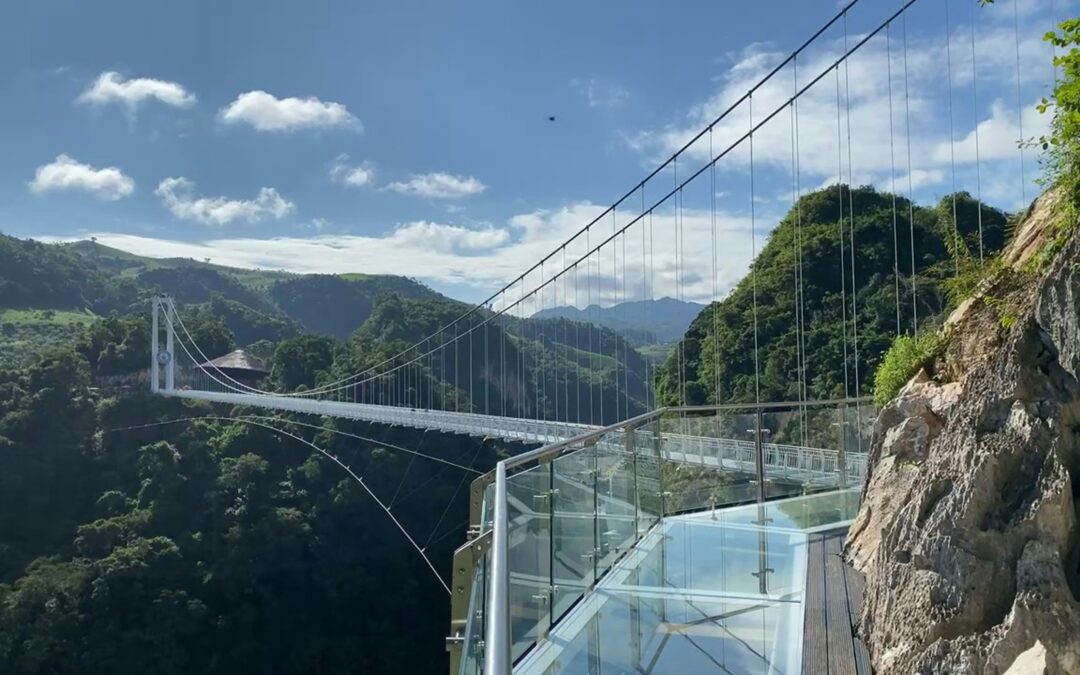
Photo credit: Jessica G., Unsplash — Longest glass-bottomed bridge in the world (Bach Glass Bridge, Vietnam).
What comes next?
After Open GLASSroom is before Open GLASSroom. Building on the outcomes of the project, we have already initiated further activities and collaborations. More information will follow soon — here on openglassroom.eu and on LinkedIn.